
What is Leash Reactivity?
Leash reactivity can occur when your leashed dog sees something in their environment that triggers a response from them, usually barking, lunging, or snapping. The key object in this situation is the leash. Leash reactive dogs are oftentimes fine in the same situation without the leash, but become reactive when on the leash. Common triggers include:
- Cars
- Bicycles
- Dogs
- People
- Fast Movements (a person doing squats-one of Lily's triggers!)
- And the list goes on...
Key Terms
Reactive/Reactivity: This varies from dog to dog, but at the highest level, a reactive dog is barking, lunging, jumping, lunging and could possibly bite if given the opportunity.
Trigger: This is a person or thing that causes your dog to become reactive on leash. Triggers vary from one dog to the next, but common triggers can include other dogs and moving vehicles.
Trigger Stacking: This can happen when your dog encounters multiple triggers within a short time period- think a fire truck driving by followed by a huge dog that passes a little bit too close to them. Trigger stacking increases the risk of leash reactivity. Even though your dog may generally be fine with a fire truck, if that fire truck was just followed by another dog passing by and then another fire truck, they have a much higher chance of becoming leash reactive in that moment.
High-Value Treat: These are treats that your dog should only get when doing training- think cream cheese, hot dogs, boiled chicken- anything that your dog finds really delicious! Using their kibble or a treat that isn't that special to them won't be good enough when working in a higher stress environment with many distractions.
Why Does Leash Reactivity Happen?
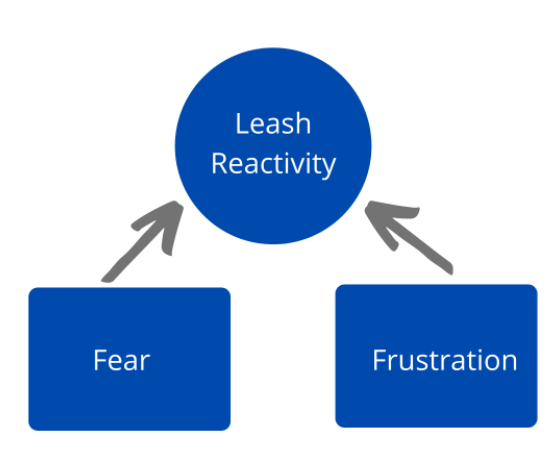
Leash reactivity most commonly arises from either frustration or fear. Although frustration can be frustrating to deal with (think a dog wanting to chase a squirrel, or exuberantly jumping on someone they're excited to see), we are going to focus on leash reactivity arising from fear, as this can be dangerous if it is not properly addressed.
When your dog is fearful on leash, they become the main actor in a "fight or flight" situation. Because they are on a leash, they can no longer 'flight," or escape because they are attached to the leash. In this situation, then, a fearful dog may choose to "fight." This is oftentimes why a dog who is not attached to a leash will be not reactive to the same thing they would be reactive to while on the leash- because in this situation, they have the option to "flight."
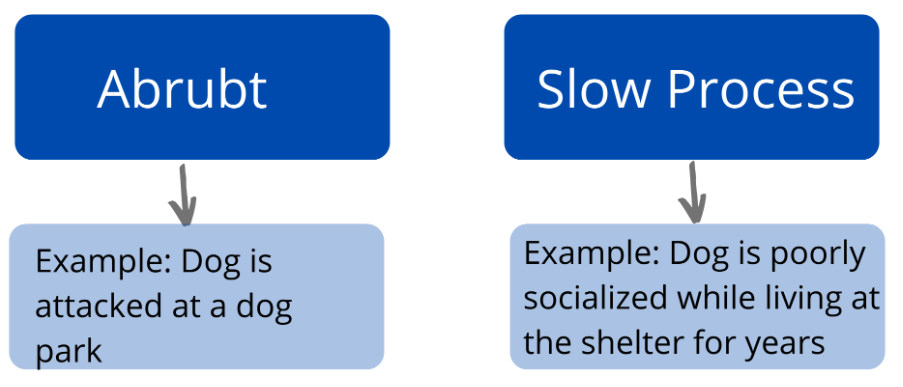
Leash reactivity from fear could suddenly develop overnight- perhaps your dog was jumped by another dog at a dog park and now they're reactive on leash to other dogs on your daily walks. Or, it could have developed slowly over time from poor socialization, a common occurrence amongst shelter dogs.
What Does Leash Reactivity Look Like?
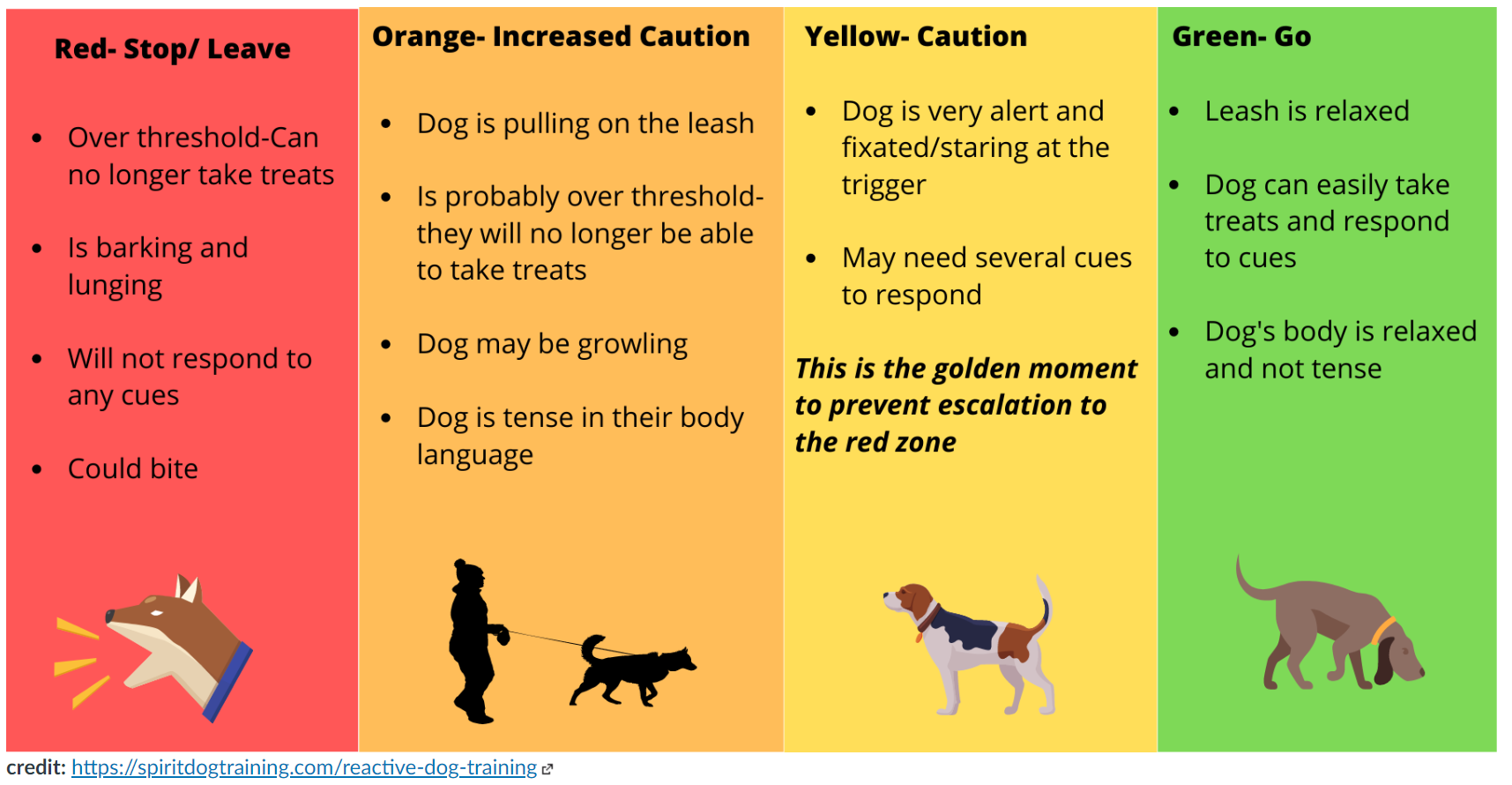
This graphic is a helpful representation of what to look for when determining if your dog is in a relaxed or reactive state. Some dogs can go from green to red with nothing in between. If you are in this situation, the training that we will go over on the next page will help develop these in-between zones, yellow and orange, so that you can stop your dog from going over threshold to the red zone. The yellow zone is your opportune moment- if you start noticing fixation on a trigger, this is the time to act.
Readings
There are so many resources on leash reactivity- the below reads are meant to be a starting point. I encourage you to read through these resources (all are short, around 10 minutes each) to help you get an idea on what areas you might want to research even more when tackling this subject.
- Summerfield, Jennifer. “From Crazy to Calm: A Training Plan for Leash Reactivity.” Dr. Jen's Dog Blog, 3 Oct. 2016, http://www.drjensdogblog.com/from-crazy-to-calm-a-training-plan-for-leash-reactivity/
- “Beginner's Guide to Leash Reactive Dog Training.” Dog Endorsed, 29 Nov. 2021, https://dogendorsed.com/leash-reactive-dog-training/
- Andes, Alex. “Leash Reactivity: A Comprehensive Training Guide.” Peach on a Leash, 4 Nov. 2021, https://peachonaleash.com/leash-reactivity-a-comprehensive-training-guide/
- Hill, Donna. Trigger Stacking & Stress Hormones - Youtube. 2013, https://www.youtube.com/watch?v=IFGIRPAWcSM (2 minute video)